
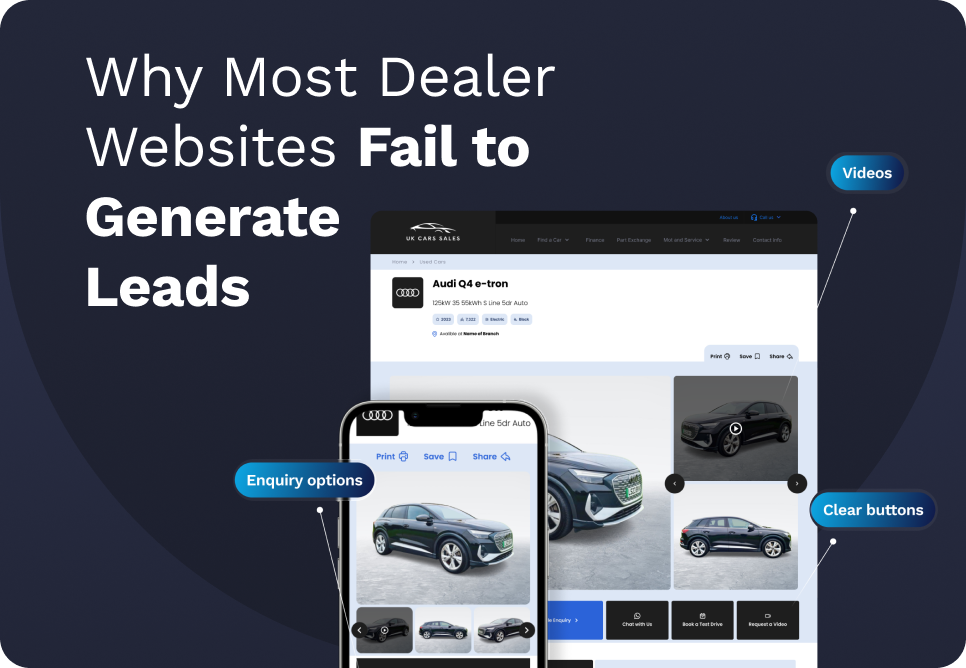
Why Most Dealer Websites Fail to Generate Leads
Table of contents
For many independent car dealers in the UK, a website is simply viewed as an online showroom, a place to display stock and share contact details. But today’s car buyers expect far more. Before a customer ever walks onto your forecourt, they have likely already compared multiple dealerships online, viewed several vehicles, and decided which businesses they trust enough to contact.
Your website is no longer just a brochure. It should be one of your most effective lead generation tools. Yet many dealer websites quietly fail at this job. They may look professional on the surface, but behind the scenes they lose potential enquiries every day.
If your website is not producing the level of enquiries you would expect, the issue may not be your stock or your pricing. It may be how the website itself performs.
The Real Role of a Modern Dealer Website
The way people buy cars has changed dramatically. Today’s buyers often begin their search online long before they contact a dealership. They browse listings, compare vehicles, check reviews, and evaluate several dealers before deciding where to enquire.
This means your website needs to do more than simply display vehicles.
A car dealer’s website should:
- Build trust quickly
- Make it easy to browse vehicles
- Answer key buying questions
- Guide visitors toward making an enquiry
When these elements work together, your website becomes a 24-hour sales tool, helping convert online interest into genuine leads. Unfortunately, many dealership websites are not designed with this goal in mind.
Where Most Dealer Websites Go Wrong
A common issue across the industry is that many websites are designed primarily to list vehicles, rather than to generate enquiries. This leads to several problems that can quietly reduce the number of potential customers who contact your dealership.
Below are some of the most common issues we see on dealer websites.
Five Silent Lead Killers on Dealer Websites
1. Slow Websites Lose Impatient Buyers
Online car buyers rarely visit just one dealership website. More often, they compare multiple dealers before making contact. If your website loads slowly, many visitors will simply move on to the next option.
Slow websites are often caused by:
- Oversized vehicle images
- Outdated website platforms
- Inefficient hosting or scripts
Even a few seconds of delay can significantly increase the number of visitors who leave your site before viewing any vehicles. Fast-loading websites keep potential buyers engaged and encourage them to browse further.
2. Mobile Experience Is Often an Afterthought
A large proportion of vehicle searches now take place on mobile devices. Customers may browse stock while commuting, relaxing at home, or even standing on another dealer’s forecourt comparing vehicles.
If your website is difficult to use on a phone, visitors may struggle to:
- Navigate your stock
- View images clearly
- Submit enquiries
- Explore finance options
Modern dealership websites must be designed with mobile users in mind from the start, ensuring the browsing experience is smooth and intuitive across all devices.

3. Lack of Trust Signals
Buying a car is a significant purchase, and many buyers want reassurance before contacting a dealership. If your website does not clearly demonstrate credibility, potential customers may hesitate to enquire.
Trust signals can include:
- Customer reviews
- Industry awards
- Finance partner logos
- Professional imagery
- Clear business information
These elements help reassure visitors that they are dealing with a reputable and established dealership.
4. No Clear Next Step for the Customer
Many dealer websites show vehicles effectively but fail to guide visitors towards the next step. Without clear calls to action, a visitor may browse several vehicles without ever being prompted to enquire.
Effective websites make it easy for buyers to take action, with options such as:
- Enquire about this vehicle
- Book a test drive
- Reserve the car online
- Apply for finance
When these options are clearly visible, visitors are far more likely to convert into enquiries.
5. Vehicle Pages That Don’t Help Buyers Decide
Vehicle detail pages are where most buying decisions happen. If these pages fail to provide the information buyers need, potential customers may leave without contacting the dealership.
High-performing vehicle pages typically include:
- Multiple high-quality images
- Clear specifications
- Transparent pricing
- Finance information
- Simple enquiry forms
When structured well, these pages give buyers the confidence to take the next step.
Quick Check: Is Your Website Losing Enquiries?
Many dealers are surprised when they review their website from a customer’s perspective.
Ask yourself a few simple questions:
- Does your website load quickly on mobile?
- Are enquiry buttons clearly visible on every vehicle page?
- Do your vehicle pages answer the questions buyers typically have?
- Does your website demonstrate trust through reviews or testimonials?
If several of these areas could be improved, your website may be missing opportunities to convert visitors into leads.
See our website examplesWhat High-Performing Dealer Websites Do Differently
The difference between an average dealership website and one that consistently generates enquiries often comes down to how the site has been designed around the customer’s experience.
High-performing car dealer websites are built with a clear understanding of how car buyers behave online. They are fast, easy to navigate, and designed to guide visitors naturally toward taking action. Rather than simply displaying vehicles, these websites help buyers move through the decision process. Visitors can quickly find the vehicles they are interested in, access key information without frustration, and take the next step without needing to search for contact details or enquiry forms.
Strong dealership websites also focus heavily on building trust. Professional imagery, visible reviews, and clear dealership information help reassure potential buyers that they are dealing with a credible business.
When all of these elements come together, the website stops behaving like a static brochure and instead becomes an active part of the dealership’s sales process.
The Business Impact of a Better Website
For many dealerships, a website is treated as something they simply need to have. In reality, it can be one of the most effective tools for generating enquiries.
When your website loads quickly, works well on mobile, and makes it easy for buyers to get in touch, more visitors turn into genuine leads. Instead of just displaying your stock, the website actively supports your sales process. For independent dealers, even small improvements to website performance can make a noticeable difference, bringing in more enquiries, more test drives, and ultimately more sales.
Your Website Should Be Working for You
Your dealership website should be doing more than simply displaying vehicles. When designed properly, it becomes a valuable sales tool that works around the clock to attract and convert potential buyers.
If your current website is not generating the enquiries you expect, it may be worth reviewing how effectively it supports your dealership’s goals.
At Spidersnet, we work with independent dealers across the UK to build websites designed specifically to generate leads and support dealership growth.
Contact us for a quote
Ready to transform your
dealership?
Let's chat about which package best suits your business.