


In today’s digital-first car-buying experience, your dealership’s website often serves as a shopper’s first impression. Around 86% of car buyers research vehicles online before ever visiting a dealership. If your website features stale or outdated content, it can turn away potential customers before you even meet them. Keeping your content current isn’t optional, it’s critical to staying competitive and building trust.
Fresh, dynamic content delivers two key benefits. First, it attracts and retains human visitors. When your website features outdated or uninteresting content, users are more likely to leave and look elsewhere. But up-to-date, relevant information encourages them to stay and explore. Second, search engines prefer fresh content. Sites that update regularly are crawled more often and can rank higher, increasing visibility to new prospects.
Refreshing your content regularly signals to both shoppers and search engines that your site is active and relevant. Below are several proven strategies to keep your dealership website current, engaging, and ahead of the competition.
Your inventory pages are among the most important sections of your website. Keep them accurate and current by updating listings as soon as new vehicles arrive or existing ones sell. Few things frustrate shoppers more than seeing a car online that’s no longer available.
Fresh, accurate inventory builds confidence, increases engagement, and helps your vehicles sell. To maintain trust and credibility, remove sold vehicles promptly, upload new arrivals with full details and photos, and adjust pricing or promotions in real time.
An updated inventory reinforces that your dealership is professional and customer-focused. Accurate listings with clear descriptions, quality photos, and even video walkarounds can turn online visitors into showroom traffic. Conduct regular audits to ensure your digital inventory matches what’s on the lot.
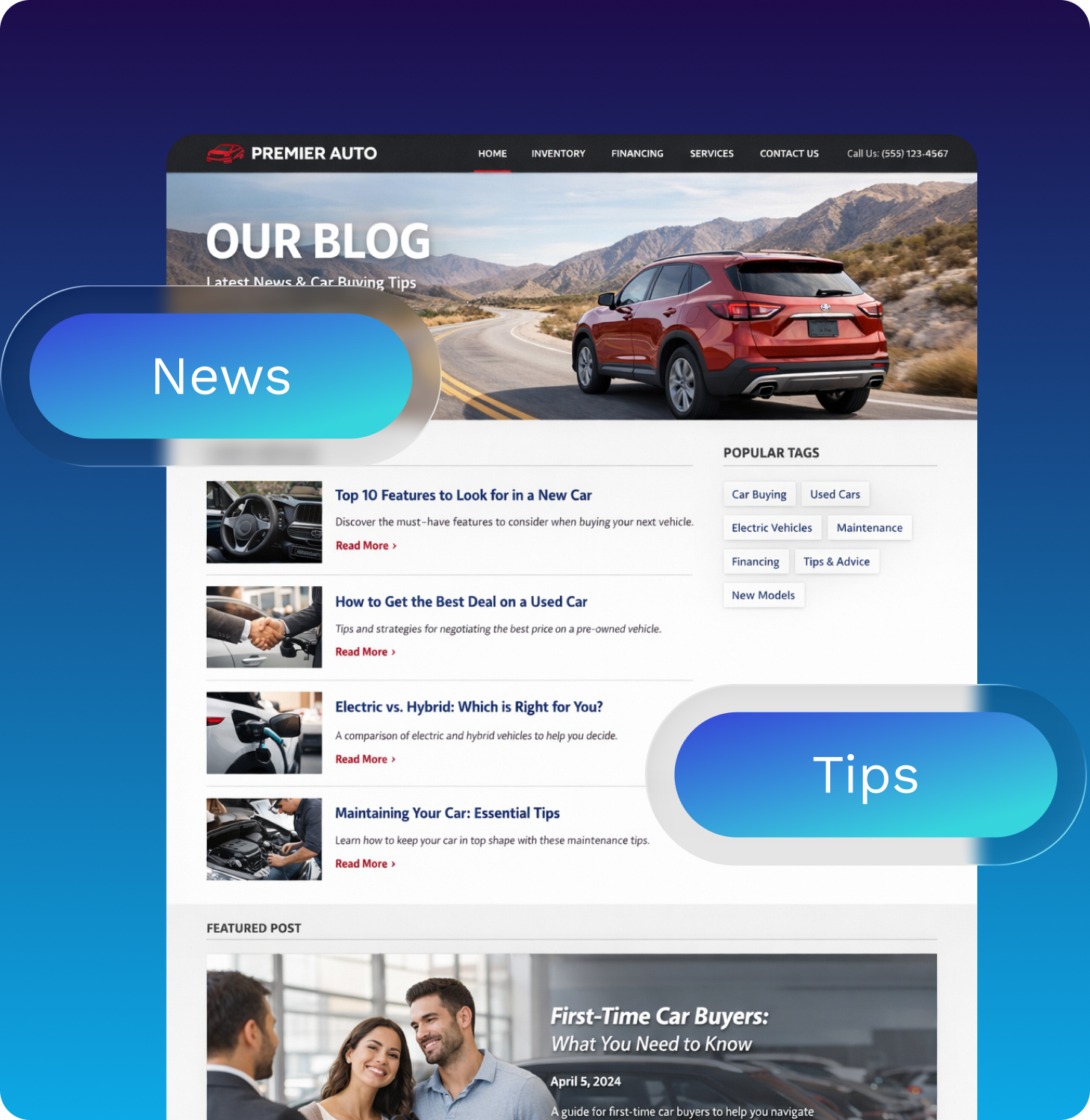
Beyond inventory, a blog or news section is a powerful tool for keeping your site fresh. Regularly publishing helpful articles builds trust, showcases your expertise, and increases search visibility through new indexed pages.
Write blog posts that answer your customers’ real questions. Useful topics include:
- Car care tips (e.g. “5 Signs Your Brakes Need Checking”)
- Seasonal advice (e.g. safe winter driving or summer road trip prep)
- Local news (e.g. dealership-sponsored events or local car shows)
- Vehicle comparisons and buying guides
- Industry updates and new model releases
Timely, original blog content not only helps shoppers but also improves SEO by naturally including relevant keywords. Stick to a consistent posting schedule (e.g. weekly or monthly) so your site always feels active.
Make posts easy to read. Use clear headlines, subheadings, and bullet points. Keep the tone conversational and helpful, like talking to a customer in person. And always include a call to action, such as scheduling a test drive or contacting your team for more info.
High-quality visuals make your site more appealing and interactive. Every vehicle listing should include clear, well-lit photos from multiple angles, and ideally, short videos or 360° spins. These virtual tours allow shoppers to get a feel for the car before visiting in person.
Research shows 80% of car buyers watch online videos, like test drives or walkarounds, before deciding on a purchase. Including that content on your site keeps visitors engaged and increases the likelihood they’ll return.
Beyond inventory, update visuals across your site. Add photos to blog posts, show off your team in service articles, and highlight community involvement with event images. Refresh homepage banners regularly to match seasons, promotions, or new arrivals.
Video is especially effective. You don’t need a big budget; simple, authentic videos work. Record a 30-second intro to a new model, a service tip from your mechanic, or a customer testimonial. These elements make your site feel alive and cater to visitors who prefer video over reading. More time on your site also helps with SEO.
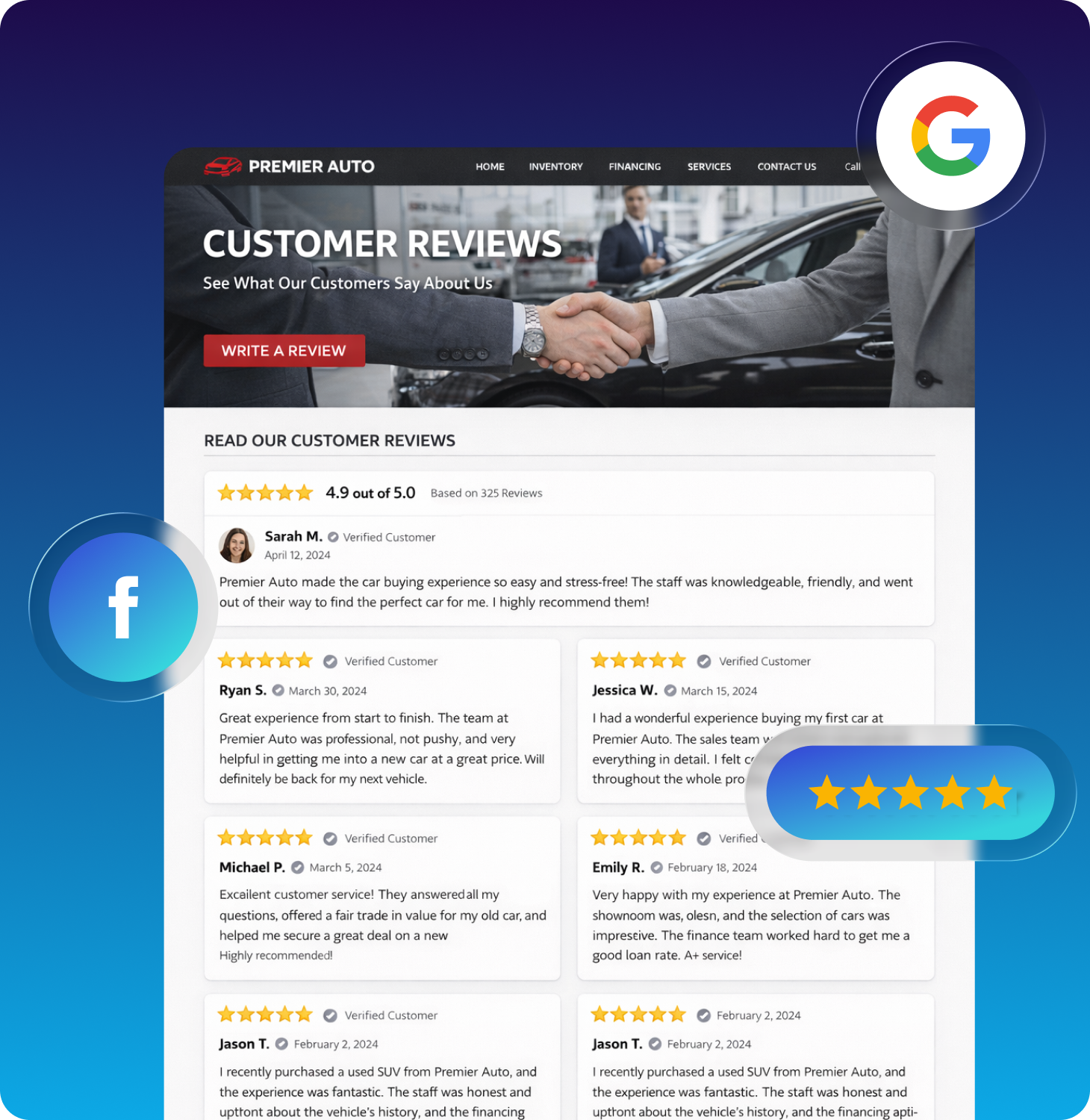
Your happy customers are a valuable source of content. Sharing testimonials, reviews, and success stories not only keeps your site fresh but also builds trust.
Ask recent customers to share a few sentences about their experience. Post these quotes on your homepage or a dedicated testimonials page, and rotate in new ones regularly. Feature your Google or Facebook reviews using widgets or graphics to highlight ratings and recent feedback.
Social proof influences undecided shoppers by reinforcing your dealership’s credibility and service quality. Some dealerships even embed live review feeds or prompt customers to leave reviews directly through the website.
Also consider long-form success stories. Interview loyal customers about why they return, or create a video featuring a family enjoying their new SUV. These personal stories make your site relatable and show that your relationship with customers doesn’t end after the sale.
Keep your homepage fresh by promoting current offers, events, and dealership news. Treat it like a dynamic storefront. Visitors should always see something new.
If you’re running a seasonal promotion or a special financing offer, feature it prominently and update it the moment it changes or expires. Examples include banners for “Holiday Sales Events” or “Tax Refund Deals.” Fresh content like this generates interest and a sense of urgency.
Use your site to showcase dealership events, both upcoming and past. Whether it’s a local charity event or a showroom launch party, write a news post about it. Afterwards, share highlights with photos or video recaps. These posts show that your dealership is active in the community and committed to giving back.
Consider a dedicated “Community” or “What’s New” page that gathers all updates in one place. This kind of content is also shareable, which helps generate backlinks and improve SEO.
When visitors see ongoing activity and new updates, they perceive your dealership as vibrant and customer-focused, encouraging them to return often.
You don’t always need to start from scratch to keep your site fresh. Repurposing and updating existing content is often just as effective.
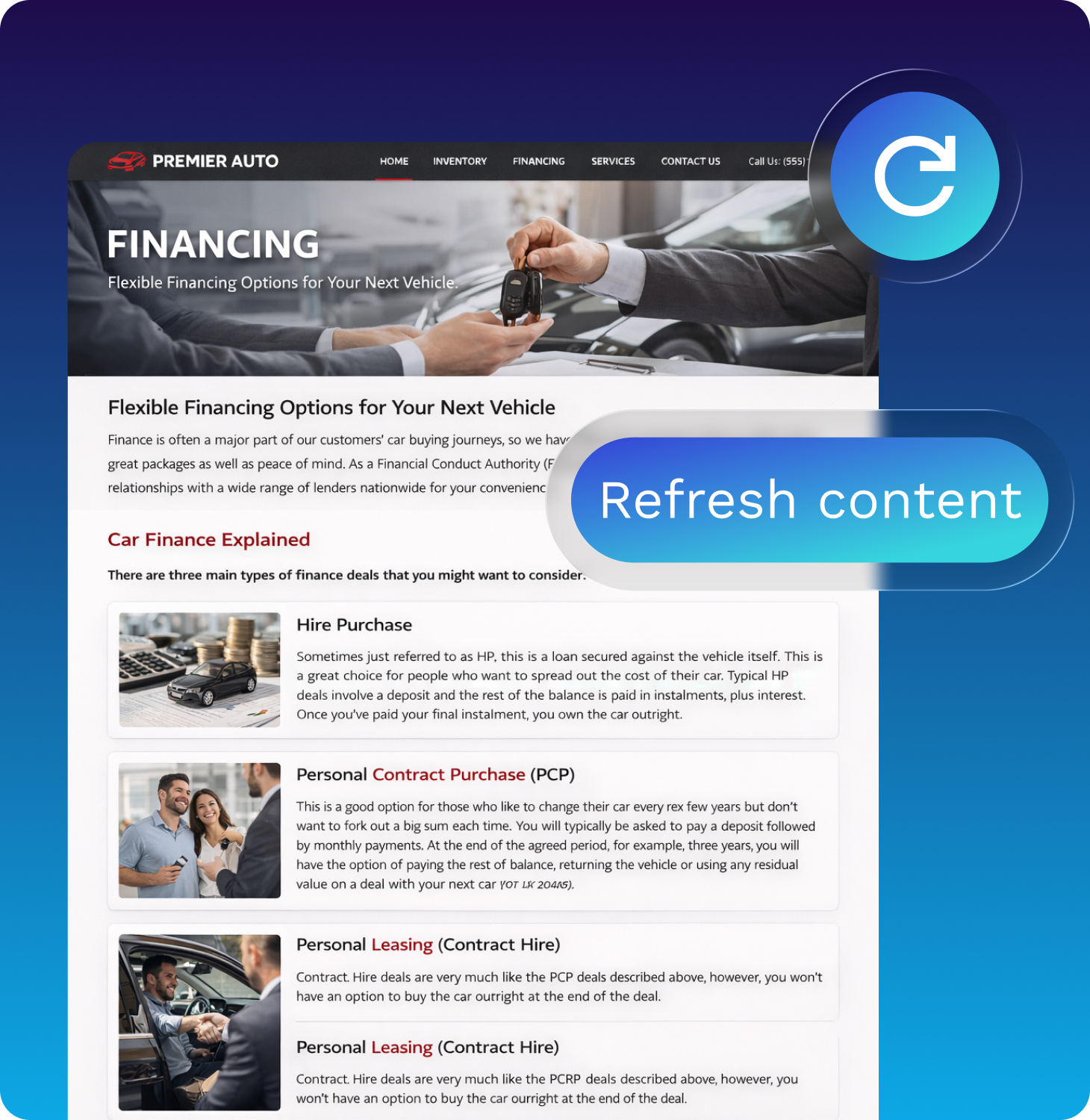
Identify older blog posts that still get traffic and update them. For instance, if you wrote a car maintenance guide a year ago, refresh it with new tips, updated data, or a new image. Add the updated date to the post so readers know it’s current.
Add features like “Related Posts” to your blog to surface older content. A post on fuel efficiency might link to a hybrid comparison article. This keeps visitors engaged and gives new life to older material.
You can also present existing content in new formats. Turn a blog post into a short video, a checklist, or even a downloadable guide. Expand brief testimonial quotes into full blog stories. A series of blog tips could become an e-book. Repurposing helps stretch your content further and keeps your site lively.
Conduct regular content audits to identify pages that need updates. Ask: Is this still accurate? Could it be more useful or engaging? Updating old content maintains high quality across your site and helps build trust with both users and search engines.
Keeping your dealership website fresh is not a one-time effort, it’s an ongoing commitment. The era of “set it and forget it” websites is over. The most successful dealership sites are the ones that evolve continuously, showcase new content, and engage their audience regularly.
Think of your website as your digital showroom. A well-maintained site with updated content shows that your business is thriving and attentive. It reassures visitors that they’ll receive the same high-quality service in person.
Set up a content calendar, assign ownership, or partner with your website provider to manage regular updates. Even small changes, done consistently, can yield big returns, from higher SEO rankings to stronger customer engagement.
Keep your content fresh, and your online presence will reflect the energy and professionalism of your dealership. Your customers, and your bottom line, will thank you.